
The Pioneer
Interview with…
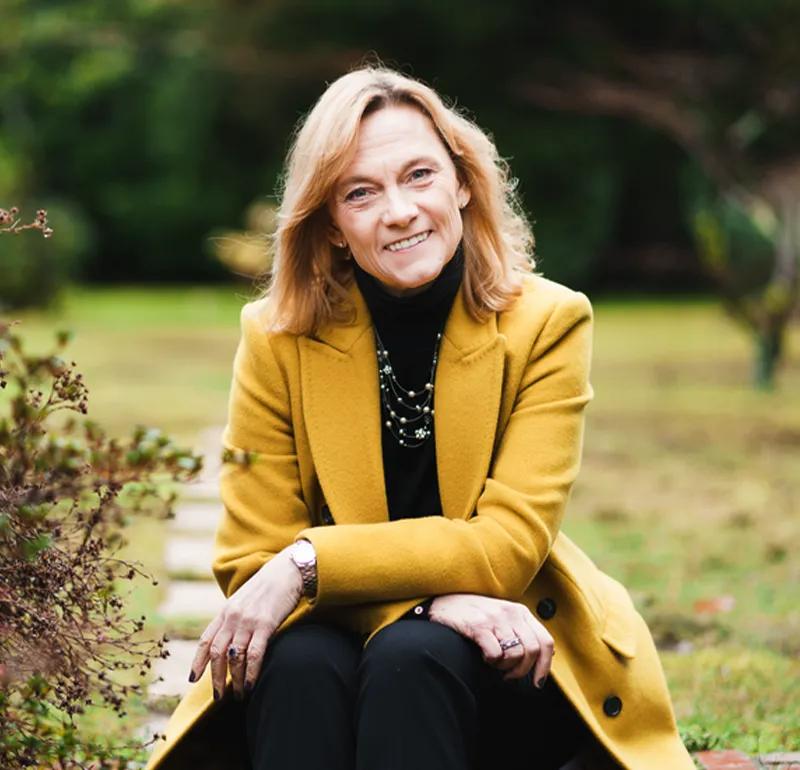
Alison Hutchinson
Co-founder at Pennies
The Pioneer
Interview with…
Alison Hutchinson
Co-founder at Pennies
Alison Hutchinson has led Pennies for 17 years, transforming a simple idea into a movement that’s raised £75m for over 1,000 charities. The concept? Protecting the nation’s favourite way of giving – dropping coins into a charity box – for the digital age.
Alison is the co-founder at the pioneering start-up Pennies. The creators had a simple idea to re-invent supporting charities little and often. Something that could work in a world of card and contactless payments. Somehow keeping it easy, affordable, and part of everyday life, while not pressuring people into feeling obliged to give – always a simple customer choice.
But this was difficult! In theory there were many challenges: interrupting the payment flow at the checkout in a shop or online. Solving the technology challenge across omni channel retailing. Risks of unhappy customers and of slower payments (all misplaced in fact). And they would have to believe in the benefits to brand and relationship, not in immediate financial returns. How was this resolved…?
Let’s start at the beginning, what problem were you trying to solve?
I’d always given a bit of money and time to charity. When I unexpectedly had 12 months out of corporate life, I asked myself how could I use my experience in tech and financial services as a force for good?
We could see something big happening. Research showed that the most loved way to give was dropping coins into a charity box. Not the most used, but the most preferred. Why? Because it was easy, affordable and made people feel good at the end of a shopping trip.
And yet we were going cashless. A burning question was emerging – how do we protect the simplicity and emotional power of the charity tin in a digital world? How can we protect the most favoured way of giving, and a really great way for charities to get additional money, in a cashless society?
I met a few people who had this idea about giving on a card, but they weren’t quite sure what to do or how to do it. And that was the beginning of Pennies.
So the challenge was to get the idea of making cashless giving a real thing. What made it so complex?
Everything! To make digital micro-donations work, you need consumers, retailers, payment providers, tech platforms and charities all aligned. If any one of them says no, it doesn’t work.
We focused on why consumers liked dropping coins in a box and then had to focus on how the technology would enable it. Payment gateways are very secure, you can’t just add charity technology in without detailed understanding and support. It was a system problem. And it’s different for e-commerce vs in-store.
We got friends from various tech and payments companies including VISA & IBM in a room and said ‘What would it take?’ The breakthrough was getting a clear specification of requirements and identifying the first payment gateway to embed the capabilities. Worldpay and Verifone were two of the first to pioneer it.
Were there any other lessons?
Yes, part of the original thinking was: ‘Let’s choose the charities and persuade retailers to support them.’
But retailers are the ones with the real estate. If you’re Pets at Home, you’re not going to support a human health charity. Your customers care about animal welfare. So, we had to let go of our assumptions. If we wanted this to scale, retailers had to nominate their charity.
We realised that Pennies had to be independent – of tech, of channel, as well as of any particular charities.
That was uncomfortable. But it was right.
Then we had a challenge with large charities who felt they should take the lead, seeing us as a threat. But we had to come back to the fundamentals – retailers want to nominate their own charities, so Pennies being independent helped each retailer focus on what mattered to them, and would have wide appeal as well as be more enduring.
We obsessed about the customer journey. It had to be opt-in, never opt-out. Instant, no extra forms, no sign-ups. Anonymous – like dropping a coin in a tin. And transparent – 100% had to go to charity.
About four years after we launched, Transport for London wanted to work with us but they were trying to get customers to sign up and share card details. Customers don’t want to do that. Customers said ‘I just want to drop coins, I just want to click’. We had to be brave and not deviate.
That’s probably one of the biggest learnings for me, how to say no, especially when it would have been easier to say yes. We could have got money to invest in Pennies, but we said no, we wanted this to be a charitable venture where we focused on social impact.
These sound like small details. They’re not. They’re everything.
How did you persuade retailers to take the risk?
At the time, ‘frictionless checkout’ was the mantra. And here we were asking retailers to add a prompt. Everyone said it would never work.
So, we had to prove that it would.
Domino’s were the first, agreeing to trial us online in 2010. On the first day, our team was ready at 10am to place the first order and make the first donation. 10am is pretty early for pizza. But when we bought ours, we were the fourth customers to have donated that morning. Three customers had already bought pizza and then went on to click ‘yes’ – without having known anything about Pennies.
That was a real moment of belief.
That three-month trial has now lasted 15 years. Domino’s customers have raised nearly £10 million.
When it works for customers, it works for the business.
How do you keep conversion rates high?
It varies enormously. We’ve seen double-digit conversion in petrol forecourts, which I once thought would never work given you often queue for petrol and then in store and the retail environment is so busy. Excitingly, we’ve seen up to 50% of consumers choosing to donate in some environments.
The difference is the execution. If the charity is clear, the messaging is right, colleagues are engaged and storytelling is strong, conversion rises. If it’s poorly signposted or rushed, it drops.
Retailers control the journey and our technology provides lots of options they can tailor to meet their requirements including: the donation amount – whether it’s rounded-up or a fixed sum or even flexible, minimum basket size, how long the prompt appears. We test and learn with them. In one case, a retailer with a large basket size gradually and incrementally increased the donation ask from 25p to 50p. Conversion didn’t change, and they doubled the money raised without hurting the experience.
We optimise for customer engagement first, fundraising second.
You’ve described moments where the journey nearly stalled. What kept you going?
Stubbornness. Actually I’d prefer to call it determination!
Five years in, Apple said they wouldn’t allow its devices to support micro-donations. We were just getting momentum and that could have broken us. I could have decided to pack up and run away but I didn’t! It took almost two and a half years of persistence to unlock that with super support from senior executives at Apple.
If Apple Pay hadn’t worked, major retailers would say ‘If I can’t take it on all my payments, I’m not going to do it at all.’
Belief in your proposition is critical but being able to influence others to believe is even more critical!
How have you stayed customer-focused over 17 years?
We’ve got few levers so we have to! Pennies is all about the ecosystem we have created and the partners we bring together. To make things happen we rely on our partners. We work with payment and technology companies to unlock the capability for retailers, we need retailers to agree to offer their customers the option to donate and deliver a great customer experience. So we have to inspire people to want to join this movement. We can’t push, we can only pull. And honestly? This isn’t about money or being able to exit with profit like a business. This is about making the biggest difference in society that one possibly can make, and working with amazing brands to create a legacy of “feel-good giving” – just a few pennies at a time. If we became too inwardly focused, we’re completely losing the fundamental reason we started this.
Where are you now? Where have you got to?
The power of micro is massive. We’ve raised £75 million from over 320 million donations. More than 200 partners. Over 1,100 charities supported. Our rate of growth is now rising fast. Last year, 15 years post launch, we grew 47%. And yet our number of donations is still less than 0.17% of all card and digital transactions.
So I look back and feel proud, and then look forward and think we’re just getting started, at the foothills of what we could achieve.
We’re trying to unlock this as a new way of giving and inspire a future generation to be more open to giving back. 67% of people under 25 say they feel better about a retail brand if the brand lets them give to charity when they pay. They say it helps them give in a way that is easy and importantly, affordable. Hopefully in the future, when they can afford to give more, it’s become a habit. We’re planting little seeds – when you give a bit you feel good, so what more can you do?
What is needed for your next steps?
You need constant improvement and bold pioneering partners.
We keep honing – new sectors, subscription models, new tech partners. Recently we partnered with Stripe, which required product changes to support micro-donations at scale.
But the real accelerators are major brands joining and championing it. When B&Q partnered, they raised £1m in five months thanks to their generous customer donations – that scale proves something powerful.
What advice would you give leaders who want to be more customer-led?
Start with the inconvenient truths. What do customers actually value? Not what’s easiest internally. Not what maximises short-term gain.
For us, that meant saying no to for-profit models. No to complex sign-ups. No to over-engineering. Every time we drifted from the original customer insight – easy, affordable, feel-good – we risked friction.
Customer-led is about discipline. And sometimes bravery. But if you hold onto what customers really care about, growth follows. And as that growth builds over time, belief does too. Belief that those inconvenient truths are the route, not the barriers, to success.
Sign up to our newsletter
Sign up to our newsletter, The Pioneer, for the latest customer-led thinking and inspiration

Sign up to our newsletter
Sign up to our newsletter, The Pioneer, for the latest customer-led thinking and inspiration

The customer-led
growth consultancy
207 King’s Cross Road, London WC1X 9DN
Privacy Policy
Website Terms of Use
All rights reserved. The Foundation 2026.
Designed by DM Design and Creative.
The customer-led growth consultancy
207 King’s Cross Road, London WC1X 9DN
All rights reserved. The Foundation 2026.
Designed by DM Design and Creative.