The Pioneer interview with... Dr Marie-Claude Gervais
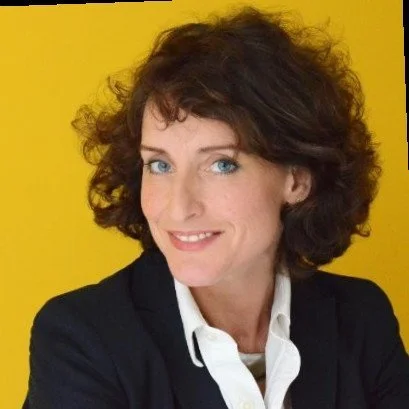
Pioneering on behalf of the seldom heard
Meeting the needs of customers is hard enough when you assume they’re like you. It becomes even harder when you recognise they’re not. And especially if they have different backgrounds and experiences of life from you and your colleagues. Dr Marie-Claude Gervais is one of the country’s foremost experts in understanding people’s diverse backgrounds and what it means for organisations.
Q. Tell me about your background and how you got into this field.
I'm from Montreal, Quebec. I came to London in 1991 to do a PhD in social psychology at the LSE. After about seven years in academia, I decided I wanted to have a more direct impact.
Social psychology is a marvellous discipline, it's all about understanding how people think, feel, and behave as members of groups or cultures, rather than focusing on individual psychology or brain wiring. It's about people as human beings in context, influenced by others and trying to influence others. It's a fantastic foundation if you're trying to understand customers in all their diversity.
My personal life has reinforced my professional interests. Meeting my British-Pakistani husband and raising our culturally complex children in London deepened my interest in diversity and inclusion. The personal and professional have absolutely intersected to create that commitment and passion.
Q. How do you apply this thinking when working with public bodies and commercial organisations?
In all my work, whether with government, charities, or corporations, I'm essentially doing the same thing: taking an organisation outside of itself, outside its comfort zone, outside its internal culture and procedures. I bring the outside world to them and help them understand the people they need to serve, whether they're customers, patients, or service users.
The topics vary, but the method and mindset remain similar, it's putting people at the forefront and understanding what you need to do to support them, whether in the service you're delivering, the product you're creating, or the team you're building.
Q. What makes your research approach distinctive?
My social psychology training has helped me create methodological situations where people share much more deeply. I observe them in context, interacting with others, going about their everyday lives. I immerse myself in their world to get a multifaceted perspective.
Even if someone tells you about their life, they may not mention things they take for granted. But if you observe them in different contexts – at home, at work – you can see things that escape their consciousness. That's the fun of being an ethnographer, being very close to customers.
I use a lot of projective techniques to bypass people's conscious self-presentation and get to thoughts they didn't even know they had, feelings they didn't know they felt. It's about reading between the lines to get interesting insights.
Q. What does pioneering for customers mean to you?
For me, it means proactively and relentlessly seeking to identify opportunities to do things genuinely better for customers so that, in small or big ways, their quality of life improves.
I think that the most genuinely 'pioneering' things have done have been when I proactively approached potential clients to raise awareness of inequalities in their area of work, or (more likely) to ask them what they are doing to address these inequalities and to suggest positive ways to understand them and meet the needs of people from various minoritised groups.
Take Macmillan Cancer Support. National surveys were showing that people from minoritised groups – minority ethnic groups, LGBT people and older people – were more likely to report poorer experiences in cancer services, and to die prematurely from cancer. So I proactively approached Macmillan Cancer Support to see what they were doing about these inequalities and whether I could help.
They took a leap of faith, investing in both the project and its independent evaluation because they believed it was simply the right thing to do.
Our approach brought together 90 diverse cancer patients alongside healthcare professionals, academics and community specialists for an intensive two-month online collaboration. Together, we explored every stage of the cancer journey using creative methods to identify inequalities and develop improvements.
The project generated valuable insights specific to each group while uncovering shared experiences relevant to all patients. More importantly, it pioneered a cost-effective model combining professional support with peer-based learning that has since been recognised for its innovation in healthcare redesign.
Q. You were recently part of the project investigating racism in cricket for the England and Wales Cricket Board, can you talk us through what you did?
The England and Wales Cricket Board (ECB) project began with one high-profile case – a professional cricketer from Yorkshire County Cricket Club, Azeem Rafiq, who alleged discrimination. His parliamentary testimony triggered the creation of an Independent Commission for Equity in Cricket to really get to the bottom of these issues and see whether this was an isolated case.
They asked me to collect stories of discrimination in cricket. What started as a targeted investigation with an expected 400-600 testimonies grew to more than 4,000 submissions from across the game. The report found that Rafiq's case was not isolated, it wasn't just banter. It really was something systemic that caused significant pain for a lot of people and talent loss for cricket, particularly amongst black people who used to be everywhere in the game of cricket and who now no longer play. And people from Pakistani and Indian backgrounds who play hugely at the recreational level but don't progress through the ranks, and women and girls being underdeveloped, and young people educated in state schools not having access to the same facilities and coaching and support as is available in private schools.
Different groups experienced different forms of discrimination. The report highlighted how cricket's leadership – predominantly white, older, male and privately educated – had blind spots and were unaware of the scale of discrimination because they'd never experienced it themselves.
Q. What changes resulted from what you uncovered?
The report was a catalyst for substantial changes at the ECB, including a restructuring of governance to separate oversight from promotion of the game. A comprehensive action plan addressed all 44 recommendations, with more than £25 million invested in equity initiatives. Complaints procedures and victim support systems were completely overhauled.
We are also now seeing wider impacts as a direct result of these changes – a wider, more diverse audience reach, greater participation and viewership, new sponsorship deals from brands wanting to associate with the transformation journey, more investment in women's cricket including broadcast coverage and better pay structures, and an improved reputation nationally and internationally.
Q. How do you help leaders confront uncomfortable truths?
It's really hard to sit with uncomfortable truth. What helps is immersion – getting people within an organisation to directly experience the challenges. For example, for the Royal National Institute of Blind People, few people working there actually have sight loss, so we had staff download an app that simulated different visual impairments, then try everyday tasks like making tea or sending an email.
This ‘direct experience’ brought reality to the decision-making and the overall discourse changed fundamentally – from patronising kindness to making structural changes.
Rich qualitative stories especially build respect and empathy. It's one thing to report that 87% of British Pakistani cricket players have experienced discrimination, but nothing is as powerful as hearing specific experiences. When the evidence is incontrovertible, it becomes motivational. People realise they need to act.
Q. What are the common misconceptions that leaders have when trying to engage with diverse audiences?
There are many assumptions about underrepresented communities, often stemming from fear and lack of confidence. Nobody wants to get it wrong or cause offence.
Many clients believe people from minority groups are 'hard to reach' or fundamentally different in their attitudes. In my experience, it's not that people are hard to reach, it's that nobody has bothered to reach out to them. When organisations genuinely listen and care, most people are keen to share their experiences and grateful to be asked.
I’ve found the biggest barriers include not thinking about diversity at all. This can happen when organisations lack internal diversity at senior levels, or think about diversity solely in terms of HR and organisational culture, not applying the thinking to their customers.
Not having the right kind of data to identify gaps and opportunities means they don’t see the scale of the opportunity. Focusing just on the percentages of minority populations means you also miss the 'diversity halo’ - the fact that many people from majority groups are attracted to inclusive brands.
And you have challenges posed by assumptions, such as 'we're for everyone' and the notion of 'a rising tide lifts all boats', without testing that proposition with diverse audiences, i.e. that improving services for everyone will close inequality gaps. Actually privileged groups often benefit more from general improvements.
Q. Is there an organisation you think is particularly good at being customer-led for diverse audiences?
Channel 4 is head and shoulders above every brand I can think of. They relentlessly care about diversity and won't be distracted by any change in the wind. They're quick to make decisions based on inclusion insights. They once pulled a programme they had invested a lot in because it could damage their brand in terms of inclusion.
Their knowledge base is so high that insights translate quickly into action. For example, their successful 'Superhumans' Paralympic campaign in 2012 actually pressured many disabled people to be exceptional, when what they really wanted was to be treated as human. The campaign immediately evolved to become 'Super Human,' building on their success while recognising that times had changed.
That's my job, to help people see that inclusive approaches aren't terrifying or exotic. Once you get to that 'aha moment' where it all makes sense, everything else falls into place.