The Pioneer interview with... Steven Roberts
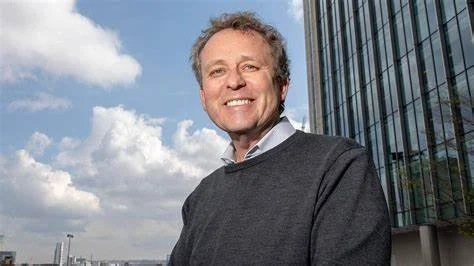
Pioneering at Barclays and beyond
Steven Roberts spent more than 30 years at Barclays Bank, where he set up Barclays Digital Eagles to help customers learn and enjoy the benefits of technology. He then created Eagle Labs, utilising unused bank branches. These spaces have become a central plank in the reinvention of the place of the bank in the UK’s start-up community, back to the original centuries-old coffee shop heritage, where bankers were facilitators for trade being formulated in a communal setting.
Q. Can you tell me about your background and how you think it might have seeded what you went on to do in your pioneering with such a human spirit?
I've always felt a bit of an outsider in organisations, and I don't know why that is. People always say I give an alternative way of looking at things. I suppose being trained as a scientist gives you a different perspective – there's scientific curiosity, and then there's general curiosity. I think you have to be genuinely curious and nosy.
I joined Barclays shortly after university. I was very lucky that banking was going through a huge transition at that time. When I was Chief Operating Officer, Barclays had 1,800 branches. Now it must be in the very low hundreds. It's an industry that's been completely transformed, and it's how you take customers and colleagues on that journey that interested me.
Q. You became known for digital transformation at Barclays, but that wasn't originally your role, was it?
I was almost forced into it! A new CEO came along and said he had an insight that I didn't – that mobile smartphones were going to transform banking. I didn't believe that. I'd lived through telephone banking and online banking, and they had some impact but didn't fundamentally change how customers interacted with us. I arrogantly thought this would just be another similar thing.
But the CEO said, "Steven, you're a very good old-fashioned banker, but I need a technology person to become Chief Operating Officer. You're not a technology person, but I know you understand colleagues and customers – will you come and help me do a digital transformation?"
I didn't really know what that meant. I thought, well, why not? I'll give it a go. It felt almost like being given a "special projects" title and put in a room away from everyone else, hoping you'll get bored and resign. Instead, being a contrary person, I embraced it.
Q. How did you approach building something new, something customer-led?
I thought, OK, I can start from nothing. I'm just going to have people who I love to work with, who I know are fantastic, who we know how each other works. We had enormous trust in each other. We had great fun and were able to do amazing stuff because we had lots of friends throughout the organisation who would do us favours and trust us to do things you ordinarily wouldn't be able to do.
One of the things we decided was that we would be the most accessible organisation in the FTSE for disabled and vulnerable people. We were the first bank in Europe to have talking ATMs for blind customers and debit cards with little notches so blind people would know which end to put in. The lady who led that work ended up speaking at the United Nations in New York twice because of what we'd done.
Q. With the move to online and mobile banking, there was no longer a need for physical banks, you took a customer-led approach to reimagining the role of branches, can you tell us more about this?
We realised we needed to put something in our buildings that people actually wanted. We installed free Wi-Fi in all our branches, turned it on 24 hours a day with the biggest bandwidth we could buy. This was when Wi-Fi wasn't ubiquitous on the high street. You didn't have to be a Barclays customer to use it.
Within six months, Barclays had become the largest distributor of Wi-Fi in Europe. Students would come in just to use it, shops moved to be next to branches. For the first time, we put something in our building that people wanted because it was useful.
Q. The Digital Eagles programme had 20,000 colleagues volunteering to teach digital skills. How did that come about?
We knew that we had to get colleagues engaged with digital transformation so I wanted to do something which would show we were prepared to invest in them. I came up with the idea of buying 10,000 (which became 20,000) iPad1 which we would give to staff to learn with “on the job”.
At the time, having an iPad was a big status symbol and we wanted staff to feel we had given them something “cool” and which they could be proud of – we even got specially made Barclays Blue covers for them and had a special personal letter inserted into the box they were packaged in from the Chief Executive of the Bank.
Well, it worked for most of the younger colleagues, but for the (mainly) older ones, 30+ say, they either were dumfounded, hostile – “this isn’t what banking is about” - or frightened, or embarrassed to ask ‘what do I do”. We also had some staff who just loved to carry them round and show off that they had one but not actually use them. Overall – it wasn’t the dramatic “statement event” I had hoped it would be and I was far from convincing all colleagues to embrace the digital future.
The idea for Digital Eagles actually came from a very personal insight about my dad. I'd bought him an iPhone for Christmas and was trying to teach him over the phone – he lived in Wales. He'd get frustrated with me saying "don't do that, that's stupid" and we'd stop having phone calls. But when we visited, my kids would spend all the time in the world with him, have enormous patience. He loved them showing him things.
That magical combination of jumping a generation – grandparents love to be with grandchildren, and grandchildren love to show adults how to do something – that was the origin. We decided to have an experiment to see if youngsters in the organisation could teach the rest of the organisation how to use digital stuff. It wasn't just banking, it was everything.
I started with a group of around 10 people to see if we could stop the iPads being wasted. And everyone involved loved it – young and older alike. And it grew, to 20,000 colleagues, and they started not just training each other but going out to train customers. A huge insight was that all of that was voluntary time. I became more and more interested in how you get more out of your colleagues for customers, and it wasn't through paying them more or shouting at them. It was giving them freedom to just be fabulous.
Q. What was the business case for all this community work?
Well, number one, it was free to the organisation because we weren't paying people extra. Staff engagement went up enormously. At a practical level, the business case was the rate at which we were converting people to use the mobile banking app. The consequence is we hardly have any branches anymore – not because we closed them to stop people coming in, but because people don't need to come in.
The traditional retail banking model for 100 years was: we force you to come into our shop to deposit cheques, get cash, sign things. While you were there, we sold you other stuff. Once mobile banking broke that ‘have to’ link, people stopped coming in.
Q. The Eagle Labs attracted some high-profile visitors, didn't they?
This way of thinking led to the Eagle Labs concept – how could we use our physical presence to be useful in communities?
When we opened the first Eagle Lab, the corporate and private banks refused to bring customers to see it because they thought it was embarrassing. "That isn't what a bank looks like, that isn't what a bank does, it's too weird."
As it grew, it’s focus become sharper, a place to host early-stage businesses, ideally grouped together so like minds combined. Before long we had politicians and members of the royal family coming because they were interested in what we were doing. You can't imagine them going to a bank branch opening, but they'd come to events we hosted on agritech or healthtech. Prince Charles came to an event on agritech in an old bank building because he was very interested in it.
It differentiated us from other banks because, let's be honest, all banks are the same apart from different coloured logos. We all do exactly the same thing. But having those differentiators meant we were winning new customers because we were doing something focused on their needs.
Q. What is the most important skill when developing a customer-led approach?
One of my biggest insights was what I called ‘the power of the hive’. You might think you're clever, but think of 20,000 colleagues meeting customers all the time. The majority want to do a fabulous job and just need to be given the chance to give feedback.
I used to love sitting in banking halls, watching everything that happened, listening to conversations, talking to people. Every branch is different. You lose so much through traditional marketing segmentation – yes, there are commonalities, but everybody is different unless you're out there experiencing it.
We ran something called "Lab-versity" – copying John Timpson's approach at Timpson University. We'd take branch managers on a three-month programme learning what Eagle Labs did in communities. At the end, I asked the first cohort what was the most important thing they'd learned. They said, "I learned to listen."
John was on the board at Barclays, he is a force of nature and fabulous. The insights from him and others I've learned from are so consistent: Listen to your customers. Listen to your colleagues. Get close to them. Repeat, repeat, repeat. Be curious, constantly curious. It seems obvious, but so few companies really do it.
Q. Since leaving Barclays, you've been working with startups and universities. Are the lessons the same?
Absolutely. I'm working with deep-tech companies, education ventures, apprenticeship programmes. The challenge is getting them to think about what customers actually want rather than what they think customers want.
One company I'm helping is a university spin-out where all the staff have academic backgrounds. Trying to get them to think customer-first rather than product-first is a relentless thing. The founder gets it, but they're conditioned for a different world.
Another is run by a 20-year-old called Romario who's created a community of 5,500 apprentices and people who want to become apprentices. He's brilliant at listening to customers – his challenge is converting what he hears into sales. But he’s getting there.
Q. Why do you think companies struggle so much with being customer-led?
They get distracted. There's always some crisis or financial target that has to be met. Combined with that, curiosity is so important but often gets lost. Companies think they know what customers want without actually asking or observing.
I think service has got so much better in Britain overall, which makes it harder to stand out. It used to be easy because so much was rubbish! But the companies that get it right still really stand out.
Q. Can you give us an example of a company that gets customer service right?
I think the staff at Liberty department store are amazing. I was so intrigued about where they find such competent staff. If you go to the lighting department, they know everything about lighting, and they're not trying to sell you stuff. They're like university graduates who've been recruited because they love the subject.
I reached out through a contact to find out how they recruit. The finance director told me each department in Liberty is managed like a separate shop. They recruit graduates from design colleges across Europe who want to work there because it's so well-known. They choose people because they love lighting or dresses or men's suits – whatever they're selling.
They're also brilliant digitally. How they manage their digital offering is extraordinary. When stuff arrives at your house, it's beautifully wrapped. They're definitely not cheap, but they completely know what they're doing in both the digital and physical worlds.
Q. What's your advice for leaders who want to become more customer-led?
Start with curiosity, not certainty. The best innovations often come from admitting you don't know everything. Listen more than you speak – your colleagues and customers have the answers if you're willing to hear them.
Don't be afraid of being put in the margins. Being given a "special projects" role might be the best thing that happens to you. Think beyond your industry – the most valuable lessons often come from completely different sectors.
Make it personal. The best customer insights come from real human experiences, not data points. What you want is when a customer comes in to do the most banal transaction, they walk away with a smile on their face. Whatever you've done to create that reaction – that's what matters.
In an age of digital transformation and AI, perhaps the most revolutionary act is simply learning to listen again.