The Pioneer interview with... Natalie Ceeney CBE
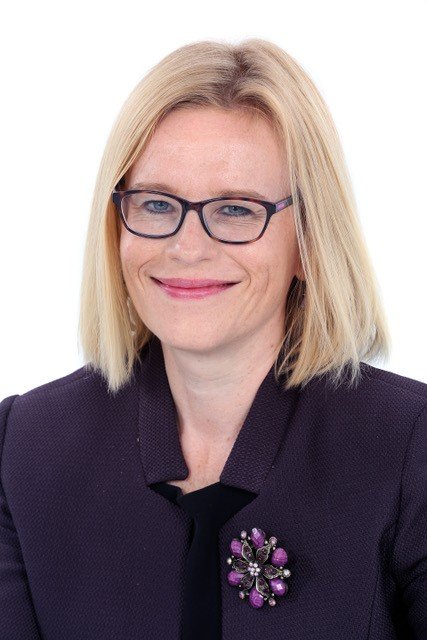
Leading the charge to deal with the UK’s loss of bank branches
As chair of Cash Access UK, Natalie is pioneering a new way to give people real-world access to their money that fits with the reality we live in. With digital banking becoming the norm, most banks have found it impossible to sustain large branch networks, with the result that more and more small towns have no bank branches.
Q. You’ve had a fascinating career journey, moving between very different sectors. Can you tell us a bit about how you got to where you are today?
Although my career has a degree of coherence when viewed through the rear view mirror, I never planned it. I’m always slightly sceptical of anyone who claims their career was carefully mapped out! What I’ve always looked for is empowered roles in organisations doing interesting things and, above all, with the ability to make a difference.
After university, I joined the NHS management training scheme because the NHS looked pretty challenging to run, and I thought, perhaps naively, maybe I could help. Having learned a huge amount about how to get change to happen on the ground I then went into consulting at McKinsey, where I picked up the toolkit I needed to drive change at a more strategic level. Then I deliberately chose roles at organisations on the cusp of major transformation: the British Library just as it was moving into the digital age, the National Archives as it took its genealogy collections online (where we moved from serving 20,000 people a year to 20 million) and the Financial Ombudsman Service just before we crystallised the PPI mis-selling scandal. After that, I moved to HSBC, and then to run the HM Courts and Tribunals Service.
More recently, I’ve moved into non-executive and chair roles, including leading the work on cash access, but also on the Boards of companies which are ‘up to something’, including my current Boards of Openreach, Spire Healthcare PLC and LV=. For me, it’s always been about spotting opportunities to shape change that really matters.
Q. How did those experiences inform your understanding of customers?
In my first roles in the NHS I was staggered by how little information we gave patients on what to expect and how to manage their hospital care – and where the idea of patient surveys and information leaflets was seen as revolutionary! But my biggest early lesson came at McKinsey, doing customer segmentation when I had the blinding insight at age 26 that not everybody thinks or buys like you! It sounds obvious, but understanding that simple idea is still too often overlooked in business.
I remember working on a merger of oil manufacturers where we conducted a robust customer segmentation to drive their brand strategy. There was a small segment that didn't realise cars need oil - and I had to admit that I was actually in that segment. Everyone around me was a car fanatic, talking about exactly what type of oil you needed, and I'm thinking "cars need oil? Interesting concept."
Most businesses I have worked for forget that many customers don’t understand their products and have a very different way of relating to your propositions than those who work inside the firm. And I’m constantly shocked by companies which even remove the opportunity for staff to become customers of their own business, such as many car manufacturers who simply allow their staff to secure a new car without going through the buying process that everyone else experiences.
At the Financial Ombudsman Service this was particularly acute because we were solving problems where things had gone wrong. We were disproportionately working with customers who don't understand banking or insurance, and who were scared of asking questions, if they even knew which ones to ask. It really drilled into me that when designing services, you can’t just think about ‘average’ customers or the ones who look like you. You need to ask not just who are we serving well, but as importantly, who are we failing to serve? And why?
Q. And now you’re working with Cash Access UK. Bank branches have been closing rapidly, yet you’ve managed to get the banks to collaborate on Banking Hubs. How did that come about?
This story starts in 2018 when I was asked to lead an independent review into the future of cash. We found that, far from a digital future being comfortable for everyone, around eight million people in the UK, about 20% of adults, still depended on cash for all sorts of reasons. For some, it was budgeting, for others accessibility, or even in order to escape domestic abuse.
I spent a year looking internationally, understanding different customer needs, and working with consumer groups, government, and industry to forecast trends and options. Our conclusion was that digital banking and payments would work well for most people, but not for everyone. Without ongoing access to face-to-face services and cash, 8 million people would be left behind. We recommended that we explore shared models to deliver services – lower cost because they were shared, but better for consumers because they could support the customers of all banks.
The report was roundly welcomed but for 18 months nothing moved. No single bank wanted to move first, and the regulator saw a challenge which felt too difficult to solve. It was what economists call a prisoner's dilemma –shared services only work if everyone does it, and there is no first moved advantage.
The breakthrough came when government committed to legislate. That created the lever for banks to collaborate. We piloted Banking Hubs in two closed shops in Essex and on the outskirts of Glasgow - a butcher’s shop and a carpet shop – each with a Post Office-operated banking counter serving all the banks, and rotating staff from all the different banks providing additional support. We opened them just after the first covid lockdown ended, having worked closely with the local community to ensure that they met needs.
The model worked brilliantly. Today, we’ve got almost 200 hubs open, heading to over 350 by the end of the parliament, with a current Net Promoter Score of 89. And crucially, they’re designed around the people who need them most – older, poorer, and more vulnerable customers who want face-to-face support, privacy and security around managing their money.
Q. Were there any insights from the research process that surprised you?
Lots. When developing the banking hubs, we conducted bottom-up insight work with communities. For example, in one Scottish pilot community, the provision looked fine on paper, but the community told us the biggest issue was that the ATMs that only dispensed £10 notes. Many had less than that in their accounts, so they literally couldn’t withdraw their own money. It’s obvious when you hear it, but if you’re not living that reality, you are unlikely to think of it.
Another big one was the role of cash in domestic abuse situations. Victims often rely on cash because many abusers control joint bank accounts. Those kinds of insights fundamentally shaped our model, and we’ve embedded research at the core of Cash Access UK ever since.
Q. How do you maintain that customer focus as you scale?
Insight has driven everything. Among our first ten hires was someone who led insight. We constantly look at data, have a developed segmentation model, work with CACI on quantitative analysis, and have tablets in every Hub measuring Net Promoter Scores. We know what drives satisfaction for each function in each Hub. We’ve also had the Foundation support us with insight work into particularly thorny propositional challenges.
We're very clear who we're serving - people who are disproportionately older, poorer, more vulnerable, and need more help. We deliberately design the physical layout, staffing model, and look and feel for these customers. We don't make it “all singing and dancing” because that's not what our customers need. They need friendly support for cash services and basic banking, an accessible location, with chairs to sit in while they wait, and friendly staff.
Q. What's been the impact beyond individual customers?
Most people understand why individuals need support with cash and basic banking, but what's less understood is the impact on small businesses. If a small business keeps accepting cash, they need somewhere to bank it. If you can pop out for five minutes to deposit cash on the High Street, that's fine. If you have to shut shop for an hour and drive to another town, you might just go cashless.
We’ve also seen footfall return to High Streets where Hubs open. And interestingly, despite cash use declining nationally, demand at our Hubs has grown 10% per year since opening. People love the convenience and support we can offer, delivered by friendly faces and in an accessible way.
Q. You're now working on digital inclusion. How does this connect to your customer-first approach?
In my original Cash Access review, I made two sets of recommendations: one about preserving access to cash while people still needed it, the other about ensuring everyone could thrive in a digital world. The first has moved faster than the second.
The Connection Project brings together some of the UK’s leading organisations – the four biggest UK retail banks, BT, Vodafone and Openreach, the BBC and ITV, consultancies Accenture, EY and PwC – to create a roadmap inclusive digital world. Because while 97% of the UK has internet access and services are increasingly going digital, there are people getting left behind – older people struggling with parking apps, banking apps being too terrifying even for smartphone users, and the friction we all experience of poorly designed experiences.
The cost of living offline averages £900 per year for individuals. It’s not just a social issue either. It’s holding back UK productivity because businesses are forced to keep analogue and digital systems running in parallel. Our goal is to map out what it would take to create a truly inclusive digital economy, work with government and the third sector to forge a shared commitment to making it happen.
Q. Stepping back, why do you think so many organisations still struggle to be customer-led?
I fundamentally believe customer focus drives financial success – fewer complaints, lower failure demand, more loyalty and becoming the company of choice. But organisations face competing pressures. Well-intended regulation can sometimes force poor customer outcomes. Commercial realities mean not every customer segment is profitable. And big organisations can get stuck in silos, designing services that make sense internally but not for customers.
The best leaders fight against that. In my Board roles, I work with excellent CEOs who all care deeply about their customers. But they all face the challenges of legacy structures, regulatory barriers, short-term commercial pressures and embedded processes which aren’t great for customers. Often, it’s smaller businesses that really shine because they’re closer to their customers, haven’t got the burden of legacy systems and can respond directly. In Cash Access UK we’ve had the advantage of being able to design a lot of our model from scratch, but even there, we grapple with some of the same barriers as larger businesses.
Q. Which organisations impress you with their customer focus?
I love Ocado because their journey is easy - they have what I want, ordering is simple, staff are friendly, and if anything goes wrong, I can solve it in a click. Octopus Energy designed a brilliant customer journey for installing my EV charger - they gave me an easy way to photograph my home environment so they brought all the right kit and completed installation in one visit.
Screwfix is another example - my husband declared when our local one opened that it was the best day of his life – quickly qualifying that to be second only to our wedding…. They understand their customer needs perfectly: tradespeople or DIYers who need parts now, with easy parking and quick service.
They're all different brands and propositions, but they offer well-designed journeys that are clear about who they're targeting and what customer needs they're meeting. For me, it comes back to really understanding who you're targeting and what they need. Then delivering it!